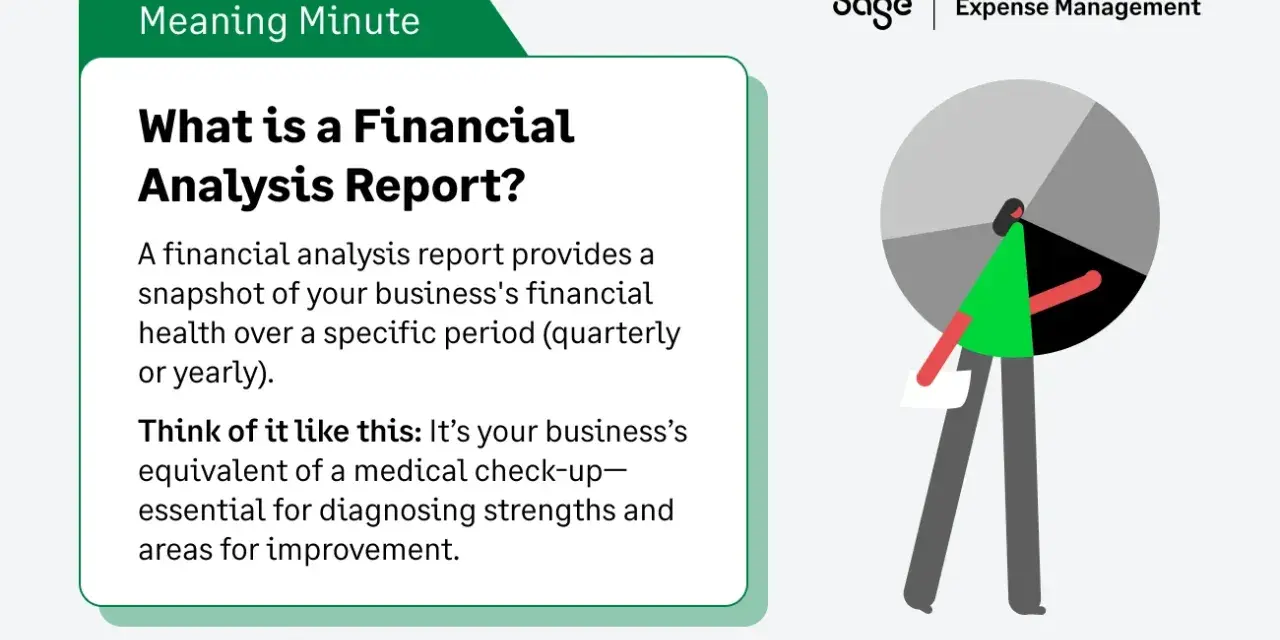
A monthly financial review is the point where accounting stops being a record of the past and becomes a management tool. It tells me whether the books are clean, whether cash is behaving as expected, and whether margins, receivables, and expenses are moving in the right direction. For a US business, that discipline matters not only for planning, but also for governance, lender confidence, and audit readiness.
What matters most before the books close
- Focus first on completeness, reconciliations, and accruals; analysis comes after the numbers are trustworthy.
- Review the income statement, balance sheet, cash flow, AR, AP, and any covenant or inventory risks every month.
- Use a repeatable checklist and ownership matrix so the close does not depend on memory or one person.
- Investigate meaningful variances, not every tiny fluctuation; management by exception saves time and improves signal quality.
- Track process speed as well as financial results, because a slow close is usually a control or data problem.
What the review is really for
I treat the monthly review as a decision checkpoint, not a reporting ritual. The question is not just whether the numbers tie out; it is whether the business made money on the right terms, collected cash on time, and kept liabilities, estimates, and accruals under control.
The question is not just whether the numbers tie out; it is whether the close leaves any room for hidden timing issues, stale assumptions, or unsupported balances to roll forward. In practice, I want the review to answer four things: what changed, why it changed, whether the change is temporary or structural, and who owns the follow-up.
For US companies, that mindset fits both private-company accounting and broader governance expectations. It also makes board reporting cleaner, because the story behind the numbers is already documented before anyone asks for it. Once that objective is clear, the next decision is which reports belong in the reporting package.
The reports and balances that belong in the package
I would not overload the review with every report available in the ERP. I would keep a core set that covers profitability, liquidity, working capital, and balance-sheet integrity, then add industry-specific schedules only where they change decisions.
| Area | What I check | Why it matters |
|---|---|---|
| Income statement | Revenue, gross margin, overhead, and operating profit versus budget and prior month | Shows whether the business model is behaving as planned. |
| Balance sheet | Cash, AR, AP, accruals, prepaid expenses, debt, and equity changes | Catches cutoff errors and unsupported balances. |
| Cash flow | Operating cash, major outflows, and cash runway | Tells me whether profit is turning into usable cash. |
| AR aging | 0-30, 31-60, 61-90, and 90+ day buckets | Surfaces collection risk before it becomes a write-off. |
| AP aging | Due now, overdue, and unusually early payments | Helps protect vendor relationships and cash discipline. |
| Inventory and fixed assets | Shrinkage, obsolete stock, capitalization, and depreciation | Important in businesses with physical goods or heavy capex. |
| Accruals and deferrals | Payroll, bonuses, rent, revenue recognition, and expenses earned but not billed | Prevents timing distortions in monthly results. |
| Debt and covenants | Headroom on lender tests and any ratios tied to financing | Reduces the risk of an avoidable technical breach. |
In a manufacturing or inventory-heavy business, I would add margin by product line and stock movement. In a service business, I would give more weight to utilization, billable hours, and project margin. The structure stays the same; the supporting schedules change with the economics of the company.
Once the package is defined, the review needs a repeatable sequence rather than an improvised discussion.
How I run the review without turning close week into a scramble
Oracle's period-close guidance reflects the order I prefer: lock the period, review the accounts, and then post the adjustments that belong in that month. The sequence matters, because trying to analyze unfinished books usually produces noise and rework.
- Confirm completeness. Make sure invoices, card transactions, payroll items, recurring entries, and approved expense reports are in the system.
- Reconcile the hard accounts first. Cash, AR, AP, and major balance-sheet accounts should tie before anyone spends time on fancy analysis.
- Post accruals and reclasses. This is where you fix timing issues so revenue, expenses, and payroll land in the right period.
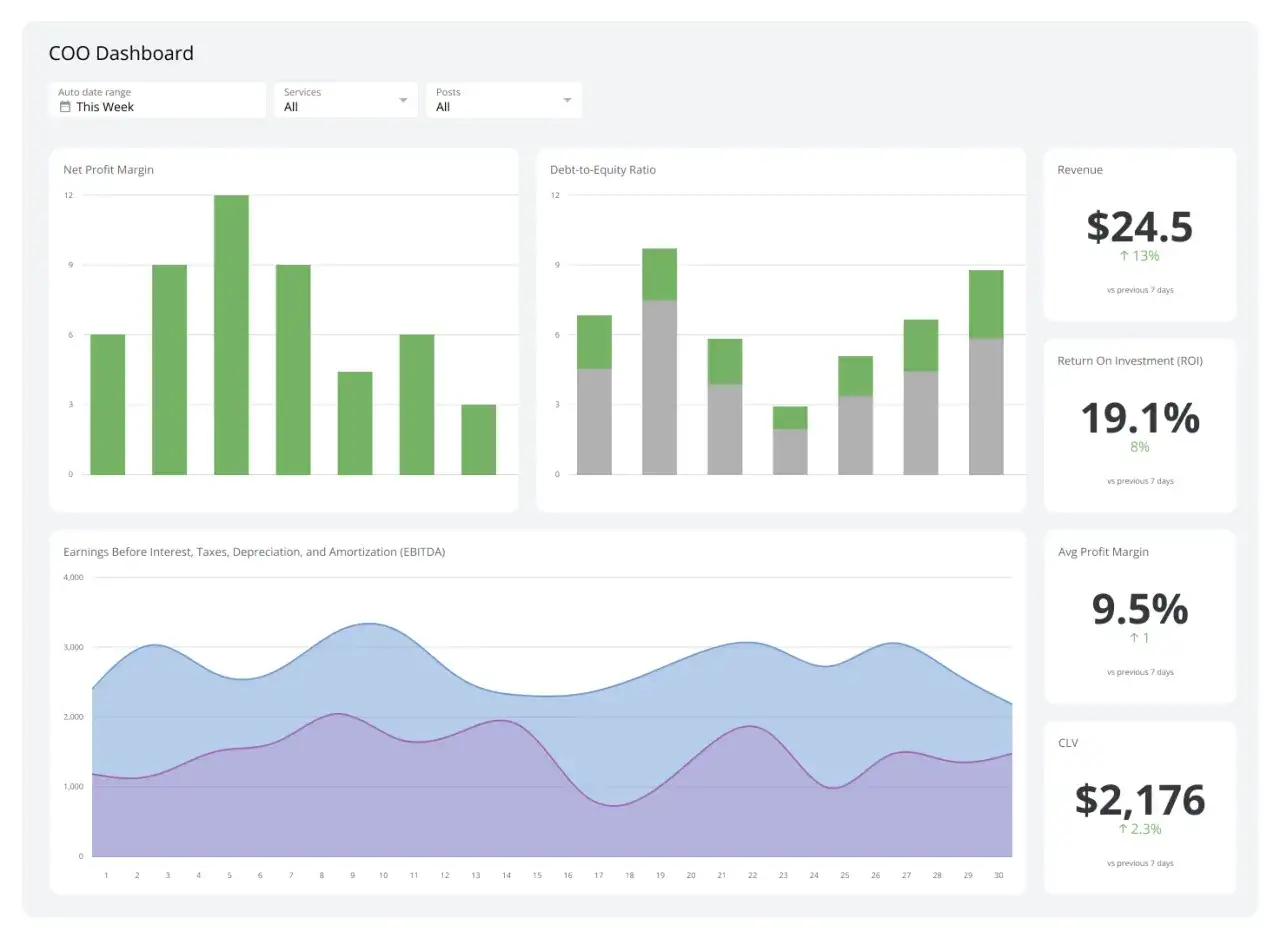
- Run variance analysis. Compare actuals to budget, forecast, and the prior month so you can separate seasonality from a real problem.
- Document exceptions. If a number moved, write down the reason, the evidence, and the owner of the follow-up.
- Lock the period only after review. A closed month should be hard to reopen, because repeated reopening destroys trust in the numbers.
I also like a light pre-close three to five business days before month end for the accounts that usually create friction. That habit catches missing invoices, unmatched receipts, and payroll surprises early, which is far cheaper than discovering them at midnight on day two of the close. The better the sequence, the easier it is to see which metrics deserve a second look.
The metrics that deserve a second look
I use thresholds as investigation triggers, not as universal rules. A software company, a distributor, and a law firm will not watch the same numbers in exactly the same way, but the following signals are a solid starting point for monthly analysis.
| Metric | Practical trigger | What it usually tells me |
|---|---|---|
| Revenue versus budget | A swing above 5% | Demand, pricing, or timing changed and needs explanation. |
| Gross margin | A move of 2 to 3 percentage points month over month | Costs, product mix, or pricing may be drifting. |
| Operating cash flow | Negative for two straight months or materially below plan | Profit is not converting into cash fast enough. |
| Accounts receivable aging | More invoices moving into the 61+ day buckets | Collections are slowing or credit policy is too loose. |
| Days sales outstanding | Up for two consecutive months | Cash conversion is weakening even if revenue looks fine. |
| Accounts payable aging | Overdue vendor balances or unusual early payments | Either cash discipline is slipping or vendor terms are being strained. |
| Bank reconciliations | Any unreconciled item that survives into the next month | There may be posting errors, cutoff issues, or fraud exposure. |
| Debt covenant headroom | Less than 10% of the cushion remains | The company is closer to a technical breach than leadership may realize. |
| Inventory shrinkage or obsolete stock | Unexplained movement, or roughly 1% to 2% shrinkage in businesses where inventory is material | Operational leakage, obsolescence, or weak controls may be building. |
Those are not red lines written in stone. They are the kind of numbers that make me stop and ask a better question before the issue becomes a quarter-end surprise. Management by exception works only when the exception thresholds are sensible and the underlying data is clean.
That leads directly to the part most teams underestimate: the mistakes that make the review feel busy while adding very little decision value.
Common mistakes that weaken the process
The biggest failure mode is not a lack of data. It is a review that produces motion but no conclusions.
- Starting the review before the books are reconciled. That turns analysis into guesswork.
- Reviewing too many metrics at once. If everything is important, nothing stands out.
- Leaving follow-up tasks unassigned. A variance without an owner is just a note.
- Letting one person carry the process. If the close depends on a single controller or staff accountant, the process is fragile.
- Ignoring recurring timing differences. If the same accrual or reconciliation keeps causing trouble, the problem is structural, not random.
- Treating review as compliance only. The goal is not merely to prove the books exist; it is to make better decisions with them.
When close cycles drag on, the causes are usually familiar: too much manual work, weak system integration, unclear task ownership, or unresolved exceptions that keep rolling forward. Datarails notes that many growing businesses can finish a structured, partially automated close in 3-5 business days, which is a useful benchmark for how much friction there is in the process. Once those mistakes are visible, the next step is to make the whole workflow faster and more reliable.
How to make the review faster and more reliable
I do not think automation replaces judgment in accounting. I think it removes the repetitive work that keeps judgment from showing up where it matters.
- Build a close calendar with owners, due dates, and dependencies.
- Standardize recurring journal entries and reconciliation templates.
- Automate bank feeds, invoice capture, and matching where the data quality supports it.
- Use a variance template so every material swing is explained the same way each month.
- Keep a running issues log so unresolved items do not vanish after the meeting.
- Cross-train the team so the close still works when one person is out or the volume spikes.
Good software helps, but only when the underlying controls are sound. The point is not to speed up a broken process; it is to shorten a process that already has clean ownership, reconciliations, and approval trails. That is also why close-management tools and AI-assisted matching are gaining traction: they are useful when the finance team wants to spend less time hunting data and more time reviewing exceptions.
When those controls are in place, the monthly routine starts to support governance instead of just recording history.
What a disciplined monthly review changes for leadership
Once the review is working properly, the benefits show up beyond accounting. Leaders can approve hiring with better timing, pressure-test pricing decisions, manage lender conversations with less anxiety, and spot working-capital problems before they become cash problems.
For companies with boards, investors, or financing agreements, the monthly process also creates a cleaner audit trail. It shows that management is not waiting for year-end to discover what went wrong. That kind of discipline is especially valuable in the US market, where governance expectations, covenant monitoring, and internal controls often carry real strategic weight.
If I had to reduce the whole process to one rule, I would keep it simple: close the books cleanly, explain the variances honestly, and leave every review with named owners and deadlines. That is what turns monthly reporting into a decision system instead of a reporting chore.